THE EDENEUM CODEX · LOGIC
The Categories
Aristotle · Chapter I, free
The ten ways a thing can be.
The first book of the Organon begins with names. A man and his portrait are both called “animal”; a man and an ox are too, but not in the same way. Chapter I sorts every shared name into three kinds, and logic starts from there.
Make a free account and it opens in the reader. No card.
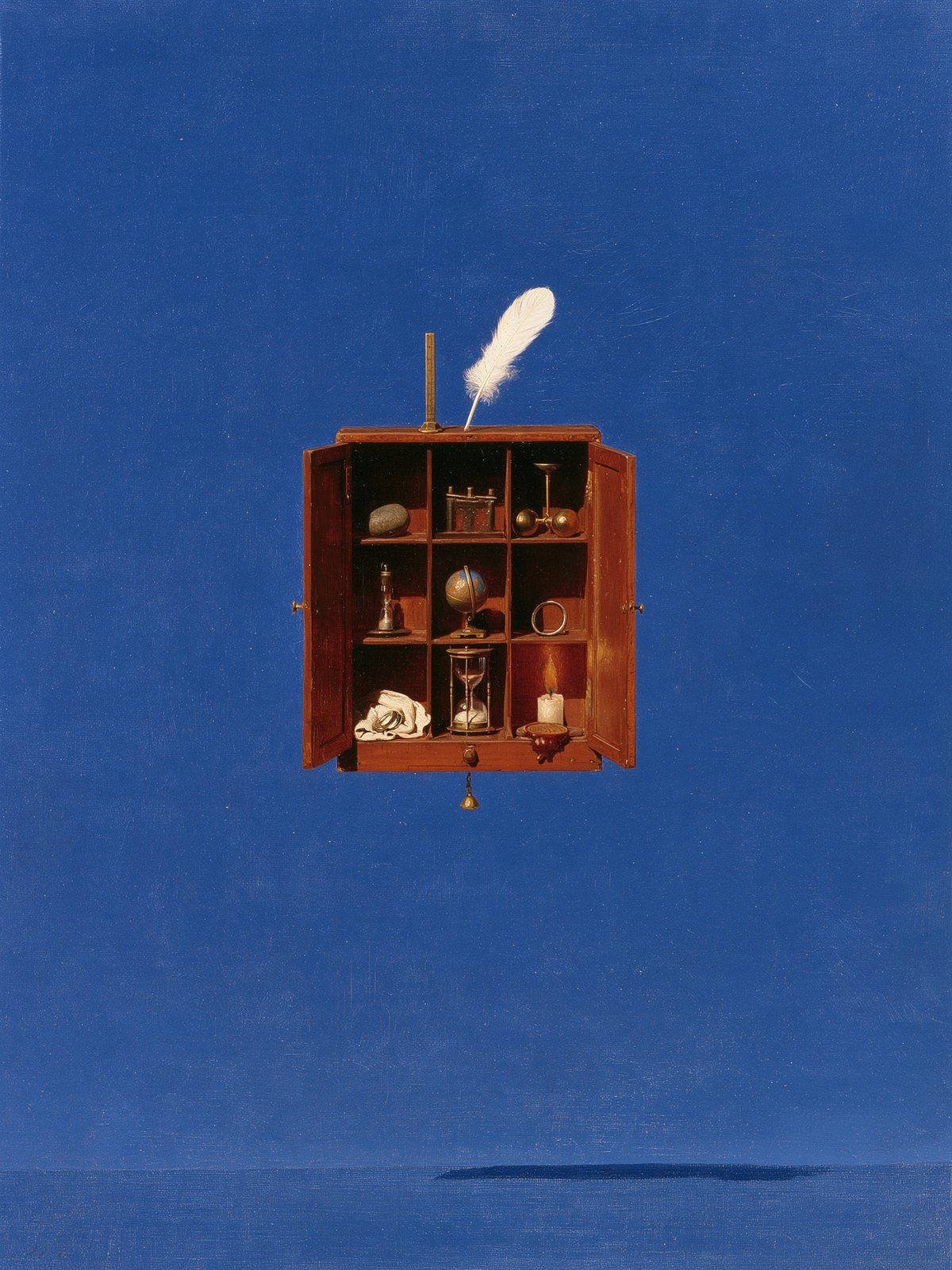
Chapter I: Univocal, Equivocal and Derivative Terms
The whole chapter, in the Enhanced Edition: nothing held back. Counted from the chapter itself:
- 2
- passagesnumbered, in the translation
- 15
- platespaintings and drawings
- 3
- tablesthe argument laid out
- 7
- notescallouts, exercises, going deeper
Read it three ways at once
Things are univocally named, when not only they bear the same name but the name means the same in each case—has the same definition corresponding. Thus a man and an ox are called 'animals.' The name is the same in both cases; so also the statement of essence. For if you are asked what is meant by their both of them being called 'animals,' you give that particular name in both cases the same definition.
Language serves as more than just a tool for communication - it's a gateway to understanding fundamental categories and shared characteristics. This explains why Aristotle begins his Categories by carefully examining words, expressions, and predicates. For him, understanding how language relates to reality is crucial before exploring the categories themselves (which he only outlines in Chapter 4).
- The translation · H. P. Cooke, 1938
- The house’s plain English
What the Enhanced Edition adds
| Basic | Enhanced | |
|---|---|---|
| The originalThe text in its own language where the house holds it | ● | ● |
| The translationA standing English translation, named and dated, with its notes | ● | ● |
| The plain EnglishThe house's English, passage by passage, at the speed of thought | — | ● |
| Summaries and platesThe chapter in brief, visual frameworks, tables and drawings | — | ● |
| Mind maps and slidesThe argument mapped, and a deck to teach it from | — | ● |
| Audio, video and quizzesListen to the chapter, and test it with the answers kept beside | — | ● |
| Your passport stampFinish the book and it is stamped into your passport | — | ● |
15 chapters, one road
- Chapter IUnivocal, Equivocal and Derivative TermsFree
- Chapter IISimple and Complex ExpressionsEnhanced
- Chapter IIIPredicatesEnhanced
- Chapter IVThe Ten CategoriesEnhanced
- Chapter VOf SubstanceEnhanced
- Chapter VIOf QuantityEnhanced
- Chapter VIIOf RelationEnhanced
- Chapter VIIIOf QualityEnhanced
- Chapter IXThe Remaining CategoriesEnhanced
- Chapter XThe Four Classes of OppositesEnhanced
- Chapter XIContraries of Good and EvilEnhanced
- Chapter XIIThe Senses of ‘Prior’Enhanced
- Chapter XIIIThe Three Senses of ‘Simultaneous’Enhanced
- Chapter XIVThe Six Kinds of MotionEnhanced
- Chapter XVThe Meanings of ‘To Have’Enhanced
The whole Enhanced Edition is $70, yours for life. Citizens read every book in the Basic Edition and take each Enhanced at a member’s price.